
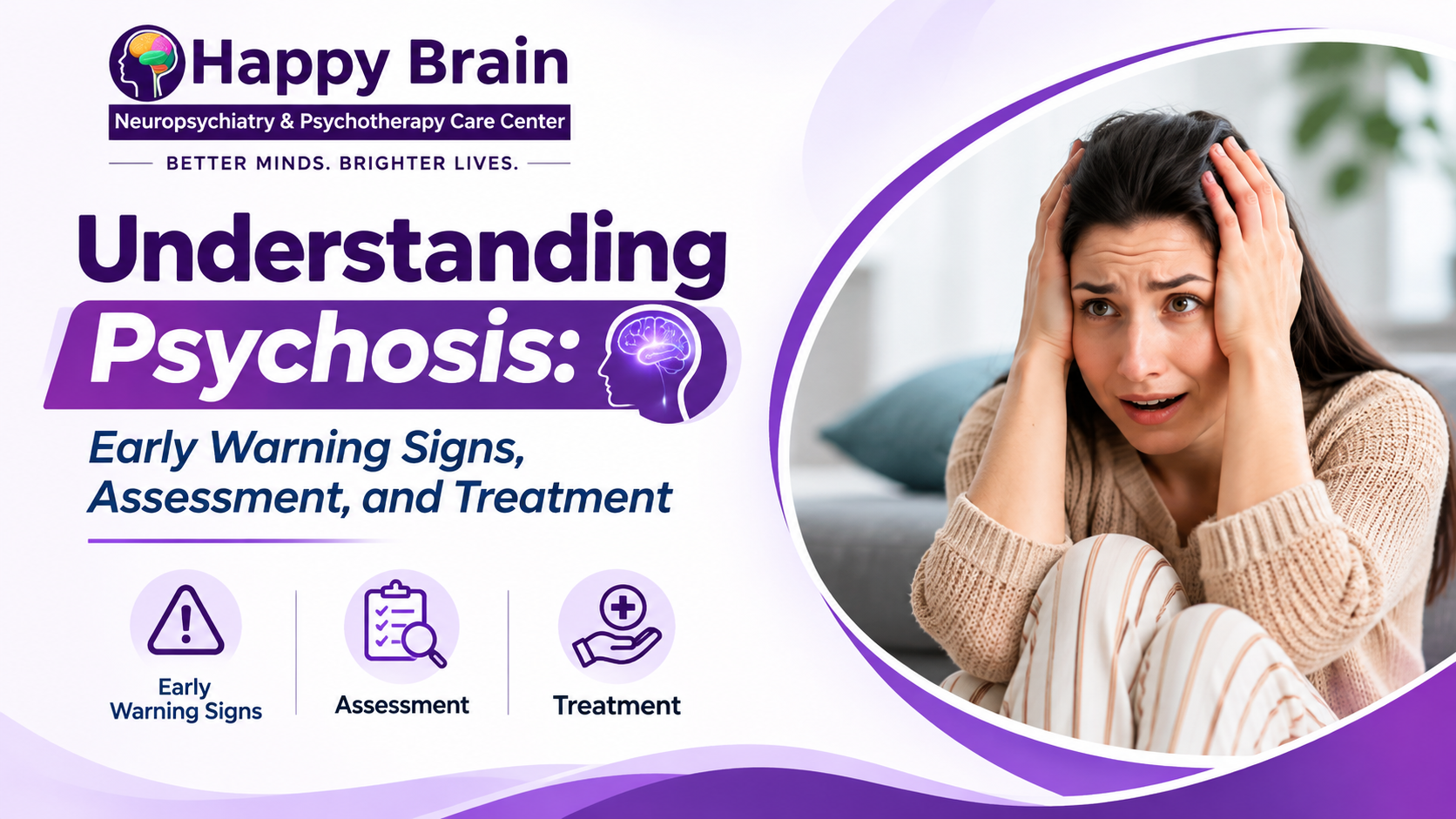
Psychosis is a mental health condition in which a person experiences difficulty distinguishing what is real from what is not. It can affect thoughts, perceptions, emotions, and behaviour. Psychosis is not a mental illness by itself; rather, it is a group of symptoms that may occur in conditions such as schizophrenia, bipolar disorder, severe depression, or certain medical and neurological conditions. Recognising the early warning signs and seeking timely professional support can make an important difference in a person’s recovery.
Psychosis can develop gradually or appear suddenly. Early symptoms may be subtle and are sometimes mistaken for stress, unusual behaviour, or social withdrawal.
Common warning signs include:
Social Withdrawal: Losing interest in friends, family, studies, work, or activities once enjoyed.
Changes in Thinking: Difficulty concentrating, organising thoughts, or communicating clearly.
Suspiciousness: Developing unusual fears or believing that others are watching, following, or trying to harm them.
Unusual Beliefs: Holding strong beliefs that are not supported by reality, even when presented with contradictory information.
Hallucinations: Hearing voices or seeing, feeling, or sensing things that others do not perceive.
Changes in Sleep and Mood: Experiencing disturbed sleep, anxiety, irritability, or unexpected emotional changes.
Decline in Daily Functioning: Struggling with personal hygiene, responsibilities, academic performance, or professional activities.
Experiencing one of these symptoms does not automatically mean someone has psychosis. However, persistent or worsening changes should be discussed with a qualified mental health professional.
A comprehensive psychiatric assessment is essential to understand the symptoms, identify possible causes, and plan appropriate treatment.
A psychiatrist may:
Discuss Symptoms and History: Understand when the symptoms began, how frequently they occur, and how they affect everyday life.
Review Medical and Mental Health History: Explore previous mental health concerns, family history, medications, substance use, and relevant medical conditions.
Assess Thoughts and Behaviour: Evaluate changes in perception, beliefs, mood, communication, and daily functioning.
Recommend Investigations: Depending on the presentation, medical examinations, blood tests, or other investigations may be recommended to rule out physical causes.
An accurate assessment helps distinguish psychosis from other conditions that may produce similar symptoms.
Psychosis is treatable, and early intervention can support better outcomes. Treatment is personalised according to the underlying cause, symptom severity, age, medical history, and individual needs.
Common treatment approaches include:
Medication: Antipsychotic medicines may be prescribed by a psychiatrist to help manage symptoms such as hallucinations and delusions.
Psychotherapy: Psychological therapies, including cognitive behavioural therapy for psychosis (CBTp), can help individuals understand experiences, manage distress, and develop coping strategies.
Family Support and Education: Helping family members understand the condition can improve communication, reduce stigma, and create a supportive home environment.
Rehabilitation and Social Support: Support with education, employment, social skills, and daily routines can help individuals regain confidence and independence.
Regular Follow-ups: Ongoing monitoring allows the treatment plan to be reviewed and adjusted when necessary.
Untreated psychosis can affect relationships, education, employment, physical well-being, and overall quality of life. Seeking help early may reduce the impact of symptoms and support a more effective treatment plan.
If someone is experiencing hallucinations, strong unusual beliefs, or significant changes in behaviour, arrange an assessment with a psychiatrist promptly. If there is an immediate risk of harm, severe confusion, or inability to remain safe, seek emergency medical assistance.
Psychosis should never be a reason for shame or discrimination. With timely assessment, appropriate treatment, and consistent support, many individuals can work towards improved well-being and a meaningful life.
At Happy Brain – Neuropsychiatry & Psychotherapy Care Center, professional mental health support focuses on understanding individual needs and providing personalised care.
Early recognition. Professional guidance. Compassionate care.
Disclaimer: This article is for educational purposes only and is not a substitute for professional diagnosis or treatment.