
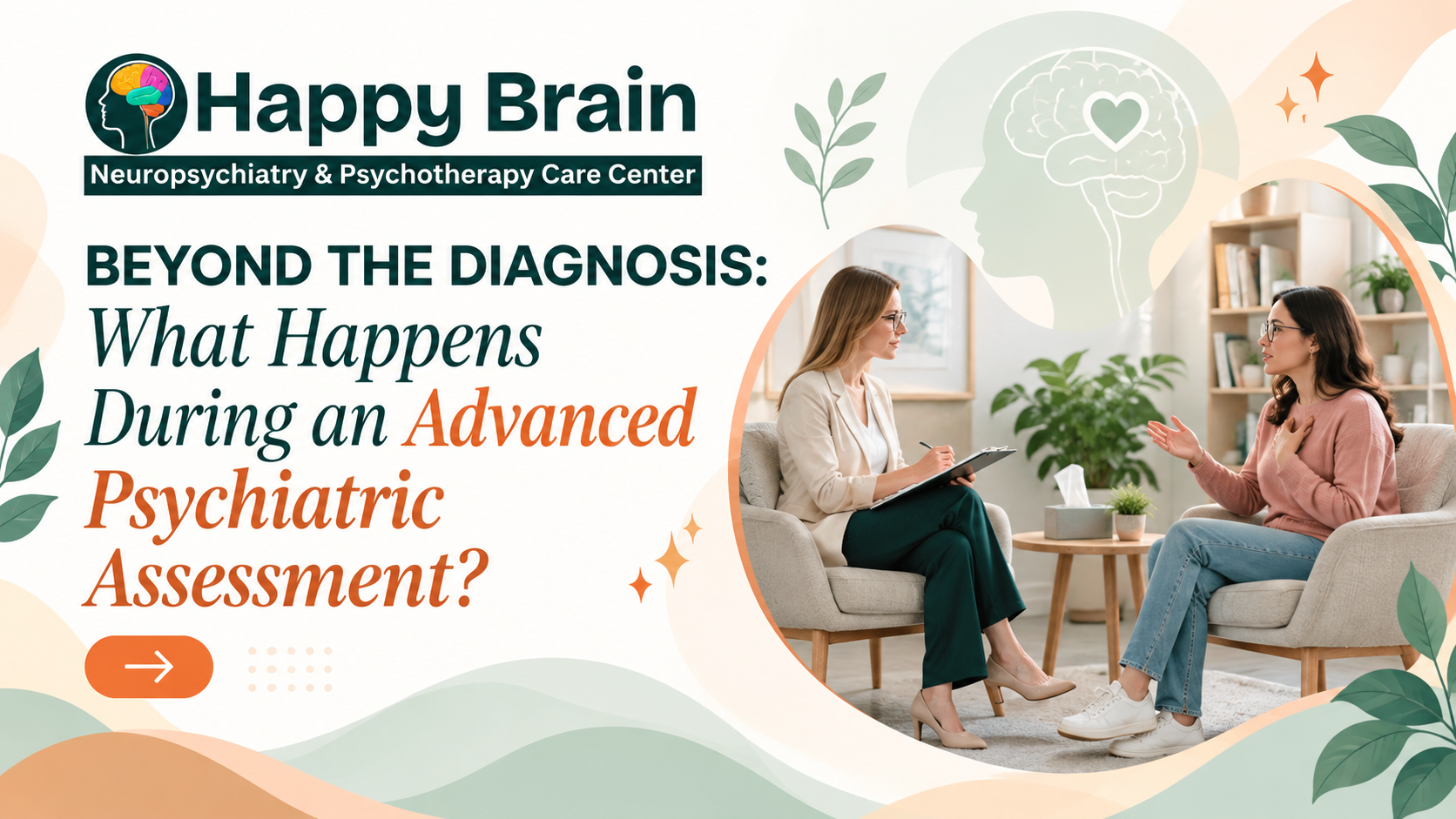
Mental health is about more than identifying symptoms or assigning a diagnosis. Every individual has a unique combination of experiences, emotions, medical history, lifestyle, and personal challenges that influence their psychological wellbeing. An advanced psychiatric assessment aims to understand these factors and provide a clearer picture of a person’s mental health.
At Happy Brain – Neuropsychiatry & Psychotherapy Care Center, a comprehensive assessment can help individuals better understand their difficulties and explore appropriate treatment options based on their needs.
An advanced psychiatric assessment typically begins with a detailed conversation about your concerns, symptoms, and personal experiences. A psychiatrist may ask when the difficulties started, how frequently they occur, and how they affect your everyday life.
Your medical history, family history, previous mental-health treatment, medications, sleep patterns, and lifestyle habits may also be discussed. These details help the clinician understand possible contributing factors and identify issues that may require further evaluation.
The aim is to understand your experiences in context, rather than focusing on symptoms alone.
Mental-health concerns can affect thoughts, emotions, behaviour, and relationships in different ways. During the assessment, a psychiatrist may explore your mood, anxiety levels, stress responses, concentration, motivation, and emotional regulation.
You may also discuss significant life events, relationship difficulties, work-related stress, or changes in your daily routine.
This conversation helps build a broader understanding of your emotional wellbeing and the challenges you may be experiencing. You can share your concerns openly, and you do not need to have all the answers before your appointment.
Depending on your symptoms, an assessment may include an evaluation of attention, memory, thinking patterns, judgement, and other aspects of cognitive functioning.
The psychiatrist may observe communication, emotional responses, thought processes, and behaviour during the consultation. When appropriate, standardised psychological questionnaires or cognitive screening tools may be recommended.
These tools provide additional information, but no single questionnaire or test can explain every aspect of a person’s mental health. Findings must be interpreted alongside clinical history and other relevant information.
Mental health is influenced by multiple factors, including biology, genetics, psychological experiences, physical health, and the surrounding environment.
An advanced assessment considers how these elements may interact. For example, persistent sleep difficulties, certain medical conditions, medication effects, or prolonged stress may contribute to emotional or behavioural changes.
Where necessary, the clinician may recommend a medical examination, laboratory investigations, psychological testing, or referral to another specialist. These steps depend on individual circumstances.
Once the assessment is complete, the psychiatrist discusses the findings and possible next steps with the individual.
Depending on the identified concerns, treatment may include psychiatric medication, psychotherapy, counselling, lifestyle modifications, or a combination of approaches. The plan should consider the person’s preferences, goals, symptoms, and practical circumstances.
Treatment is not always a one-time decision. Follow-up appointments allow the clinician and individual to review progress, discuss difficulties, and adjust the plan when needed.
Consider professional evaluation when emotional or behavioural changes persist, become difficult to manage, or interfere with sleep, work, studies, relationships, or everyday responsibilities.
Seeking help does not mean you are weak or that your difficulties must be severe. Early evaluation can help clarify concerns and identify appropriate support.
An advanced psychiatric assessment goes beyond diagnosis to explore the factors shaping an individual’s mental health. It provides an opportunity to understand symptoms, recognise contributing influences, and consider suitable treatment options.
At Happy Brain – Neuropsychiatry & Psychotherapy Care Center, we believe meaningful mental-health care begins with listening, understanding, and personalised support.
If you or someone you care about is experiencing emotional or behavioural difficulties, consider speaking with a qualified mental-health professional.
Happy Brain – Neuropsychiatry & Psychotherapy Care Center
Disclaimer: This article is for educational purposes only and does not replace professional medical advice, diagnosis, or treatment.