
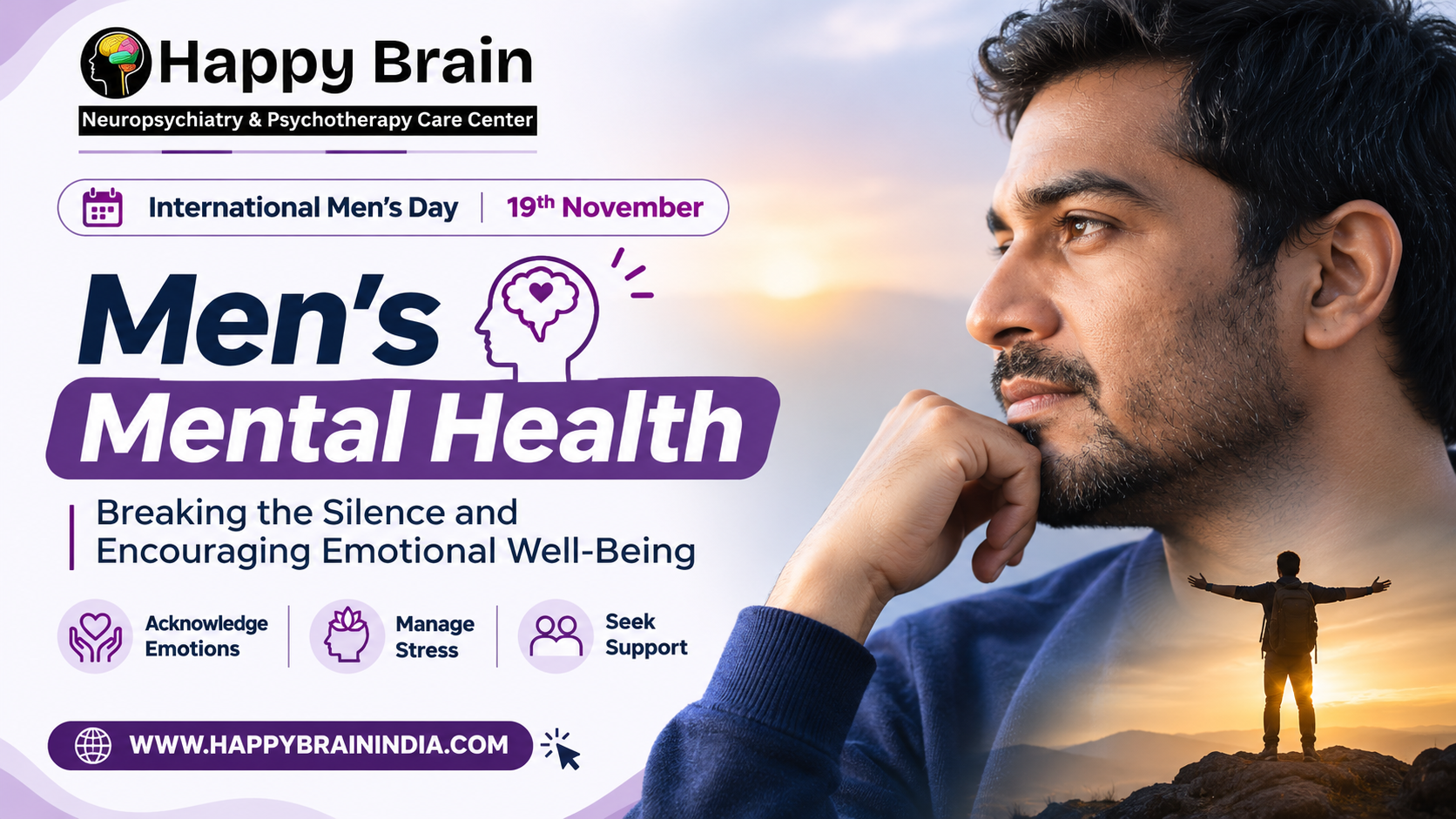
International Men’s Day – 19th November
International Men’s Day, celebrated every year on 19th November, is an opportunity to recognize men’s contributions to families, communities, and society while highlighting important issues affecting their health and well-being. One of the most important concerns deserving greater attention is men’s mental health.
While conversations around physical health have become more common, mental health struggles among men often remain hidden. Social expectations, workplace pressure, financial responsibilities, and the belief that men should always appear strong can make it difficult for many to express their emotions or seek professional help.
This International Men’s Day, let’s encourage men to prioritize their mental health without fear, judgment, or stigma.
Many men grow up hearing phrases like “Be strong,” “Don’t cry,” or “Handle your problems yourself.” Although these expectations may seem harmless, they can discourage emotional expression and create the belief that asking for help is a weakness.
As a result, men may suppress their feelings, avoid discussing personal struggles, or delay seeking professional support.
Over time, unresolved emotional difficulties can affect relationships, physical health, professional performance, and overall quality of life.
Men can experience various mental health conditions, but some symptoms may go unnoticed or be expressed differently.
1. Depression
Depression is not always expressed through sadness. Some men may experience persistent irritability, anger, loss of interest, fatigue, hopelessness, or withdrawal from family and friends.
2. Anxiety and Chronic Stress
Work pressure, financial responsibilities, relationship difficulties, and uncertainty about the future can contribute to excessive worrying, restlessness, sleep disturbances, and difficulty concentrating.
3. Emotional Suppression
Constantly hiding emotions can make it difficult to process stressful experiences and communicate personal needs, potentially affecting emotional well-being and relationships.
4. Substance Use and Addiction
Some men may turn to alcohol or other substances as a way of coping with emotional distress. However, substance use can worsen existing mental health difficulties and create additional challenges.
5. Burnout and Work-Related Stress
Long working hours, professional expectations, and limited personal time can contribute to emotional exhaustion, reduced motivation, and declining mental well-being.
Recognizing changes in emotional and behavioural patterns is an important step towards better mental health.
Some warning signs include:
Persistent irritability, anger, or frustration.
Withdrawing from friends and family.
Difficulty sleeping or excessive sleeping.
Loss of interest in previously enjoyable activities.
Constant fatigue and low motivation.
Increased alcohol or substance use.
Feelings of hopelessness or worthlessness.
If these symptoms persist or interfere with everyday life, professional evaluation is important.
Maintaining good mental health requires consistent attention and support.
Talk About Your Feelings: Share your concerns with someone you trust rather than keeping everything inside.
Prioritize Physical Health: Regular exercise, balanced nutrition, and adequate sleep support emotional well-being.
Maintain Healthy Relationships: Stay connected with friends, family, and supportive communities.
Manage Stress: Make time for hobbies, relaxation, and activities that help you recharge.
Seek Professional Help: Psychologists and psychiatrists can provide appropriate assessment, counselling, psychotherapy, and treatment when needed.
Mental health professionals can help men understand emotional difficulties, identify underlying concerns, and develop healthier coping strategies.
Depending on individual needs, treatment may include psychotherapy, stress management techniques, behavioural interventions, or psychiatric medication when clinically appropriate.
Seeking professional support is a positive step towards recovery, not a sign of weakness.
This International Men’s Day, let’s challenge the idea that men must silently carry every burden. Emotional strength is not about hiding feelings; it is about recognizing them, addressing challenges, and seeking support when needed.
A healthier man is not someone who never struggles, but someone who understands that his mental health matters.
Let’s break the silence, encourage open conversations, and create a society where every man feels comfortable asking for help.