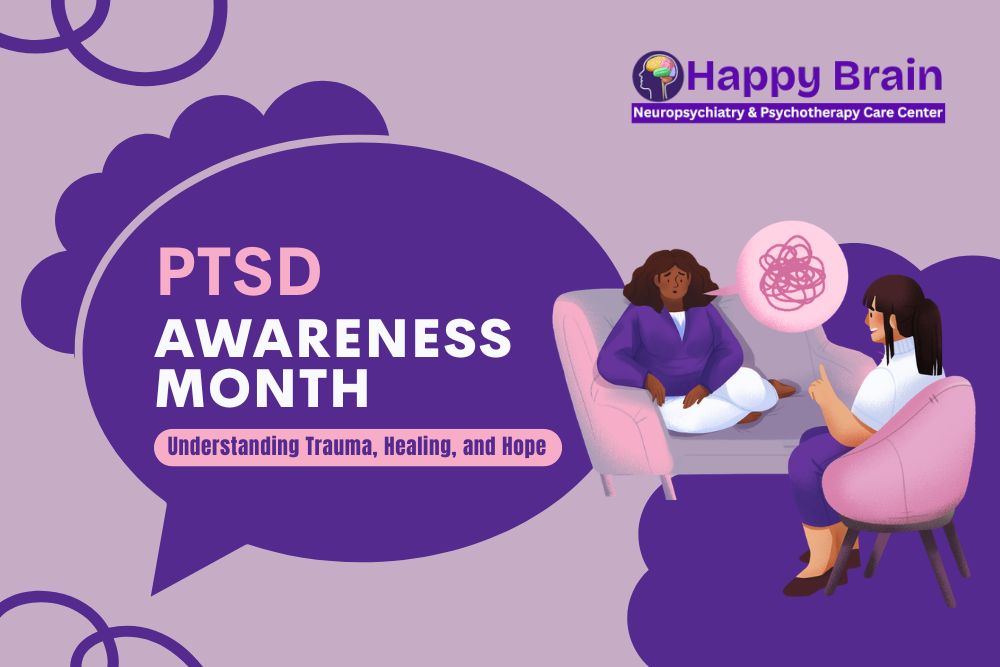
Every year, PTSD Awareness Month serves as an important reminder that mental health deserves attention, compassion, and understanding. Post-Traumatic Stress Disorder (PTSD) is a mental health condition that can develop after experiencing or witnessing a traumatic event. While many people associate PTSD with military veterans, it can affect anyone, regardless of age, gender, or background.
At Happy Brain Neuropsychiatry & Psychotherapy Care Center, we believe that raising awareness about PTSD can help reduce stigma, encourage early intervention, and promote healing.
PTSD is a psychological condition that may occur after experiencing events such as accidents, physical or emotional abuse, natural disasters, violence, serious illness, or the loss of a loved one. While it is normal to feel distressed after a traumatic experience, PTSD symptoms can persist for months or even years, affecting daily functioning and overall well-being.
People with PTSD often struggle with intense emotions, intrusive thoughts, and heightened reactions that interfere with work, relationships, and personal life.
PTSD symptoms can vary from person to person, but some common signs include:
These symptoms can significantly impact an individual’s quality of life if left untreated.
One of the biggest challenges faced by people living with PTSD is misunderstanding and stigma. Many individuals suffer silently because they fear being judged or believe others won’t understand what they are experiencing.
PTSD Awareness Month helps educate communities about trauma and its effects on mental health. Increased awareness encourages empathy, supports early diagnosis, and helps people seek professional treatment without shame.
When families, friends, and workplaces understand PTSD, they can create safer and more supportive environments for recovery.
The good news is that PTSD is treatable. With the right support and evidence-based therapies, individuals can learn to manage symptoms and regain control over their lives.
Treatment options may include:
Recovery is a journey, and seeking help is often the first and most important step.
During PTSD Awareness Month, let us remember that trauma does not define a person. With understanding, support, and professional care, healing is possible.
If you or someone you know is struggling with symptoms of PTSD, don’t hesitate to seek help. Mental health support can make a meaningful difference in recovery and overall well-being.
Happy Brain Neuropsychiatry & Psychotherapy Care Center is committed to helping individuals overcome trauma and build healthier, more fulfilling lives.