
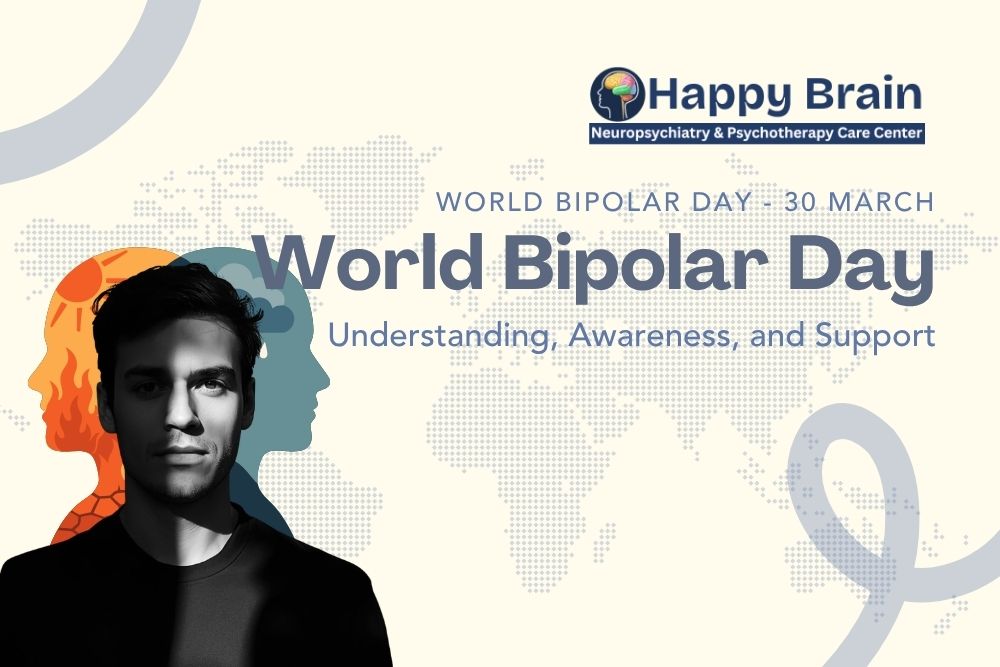
World Bipolar Day, observed on March 30, is dedicated to raising awareness about bipolar disorder and promoting understanding and acceptance for those living with this condition. The day also aims to eliminate social stigma and encourage individuals to seek timely diagnosis and treatment.
Bipolar disorder is a mental health condition characterized by significant shifts in mood, energy, activity levels, and the ability to function. These changes go beyond normal mood variations. Individuals may experience episodes of mania (extreme highs) and depression (intense lows), which can affect their daily life, relationships, and work.
There are different types of bipolar disorder, including Bipolar I, Bipolar II, and Cyclothymic Disorder. While symptoms may vary, common signs include:
These episodes can last for days, weeks, or even longer, and may vary in intensity.
Despite being a treatable condition, bipolar disorder is often misunderstood. Many people confuse it with simple mood swings or label individuals as “unstable,” which leads to stigma and discrimination. This misunderstanding can prevent people from seeking help or sharing their experiences openly.
World Bipolar Day is an opportunity to educate communities that bipolar disorder is a medical condition, not a personality flaw. With the right support and treatment, individuals can lead productive and fulfilling lives.
Effective management of bipolar disorder typically involves a combination of:
Early diagnosis and consistent treatment can significantly improve quality of life.
One of the biggest challenges faced by individuals with bipolar disorder is stigma. Fear of judgment often leads to silence, isolation, and delayed treatment. Open conversations about mental health can help normalize seeking help and create a supportive environment.
As a society, we must replace judgment with empathy and misinformation with awareness. Encouraging mental health education in schools, workplaces, and communities can make a lasting impact.
World Bipolar Day reminds us that mental health matters just as much as physical health. By spreading awareness, supporting those affected, and promoting early intervention, we can help individuals with bipolar disorder live healthier and more stable lives.
If you or someone you know is experiencing symptoms, reaching out to a mental health professional can be the first step toward recovery. Remember, help is available—and no one has to face it alone. 💙